
Temp: 26°c
Today we went to Corkscrew swamp. This is a 500 year old forest of giant Bald Cypress trees, these were saved from destruction in 1954 by Audubon. It rises up to 30 metres from a swampy area of Strangler Figs and native grasses. This habitat is shared with the Pond Apple and Red Maple trees along with the seasonal Ghost Orchid. There are lakes within the forests and these are ideal places for many types of waders and other water feeding birds. Vast amounts of migratory birds visit this area including the beautiful coloured Painted Bunting.
Corkscrew is a now a 13,000 acre permanent and seasonal paradise for endangered and under threat species whose survival indicates the overall health of the Everglades. The swamp has a long section of boardwalk to enable visitor access whilst keeping the area untouched. It was like walking into something from Jurassic Park; going from the grasses to a dense swamp forest you could see birds flitting around and you could imagine something prehistoric lurking in the shadows. On one of the side paths a Raccoon was sighted; several of us were using the Canadian nick name for them ‘Trash Panda’. Unfortunately, the amount of people gathering around scared it to a distance and by the time I got there to take my identification photo it was no more than a piece of fluff in the grass!
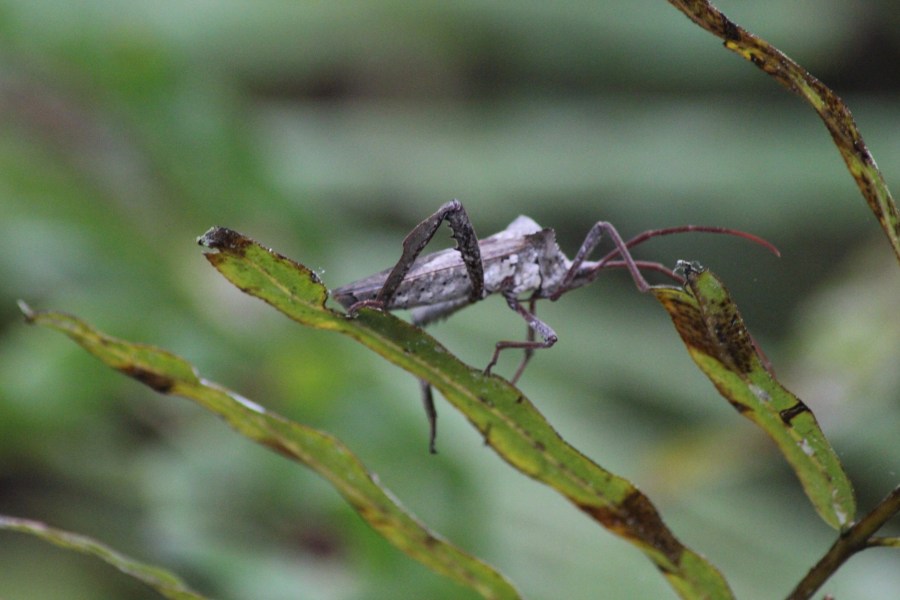
The boardwalk took some time, a good deal of this I spent yet again looking for the allusive Green Anole (no luck again). There was an unexpected downfall of rain whilst in the Cypress swamp making people scatter for shelter. Not caring about the rain, in fact I actually enjoyed it. I stayed out to see the effect it made, this in fact made the majority of birds disappear. After the downpour the birds slowly re-emerged. Towards the end of the boardwalk Laura spotted something – a large insect something like the Shield bugs we have in the UK, it was huge I took several photos which I later identified as a Florida Leaf Footed Bug.
On arriving back to the visitor centre I had a small sleep in a lovely rocking chair as I was still exhausted from the 24 hour plague. After waking up I went over to the bird feeders to find Sam taking photographs. It must have been my good luck because not long after we got not one but several rare bird sightings: the Rose Breasted Grosbeak, Indigo Bunting and the Painted Bunting which Sam had been determined to see the whole trip.
After spending the morning in Corkscrew it was suggested to go to the Bonita Beach which is local to the Vesta Field Station. We were all up for this and made a mad dash to the souvenir shop for beach supplies! I purchased myself a skimming ball that actually skims (sounds too good to be true). We ditched all of our gear at the Field Station before heading out again.
Bonita Beach is accessed via a private walled estate area, with upmarket houses and boats on either side. This is the sort of thing you would expect a drug baron on CSI Miami to live! It seems absurd to think these are probably holiday homes, some of them were bigger than the average house.
On arrival to Bonita beach we were treated to the site of a Gopher Tortoise crossing the road, it reminded me of an old man. We decided to get out the van to have a look and saw another tortoise not too far away in a burrow. We took several photos including one of the crossing sign that had a cartoon tortoise on.
We proceeded to look around the visitor centre picking up free shells and shell guides. We went along to the beach along a board walk and found an area to pitch our towels. Within seconds people were in the sea, the lecturers had purchased some beach balls to have some fun, so instead of topping up my tan I decided to join in with them. We had a good laugh and by the end we had two American footballs my skimming ball and a Frisbee on the go at once it was chaotic, but FUN! We returned back to the Vesta Field Station to eat and sleep.
 Zoological Adventures featuring Tom Everley