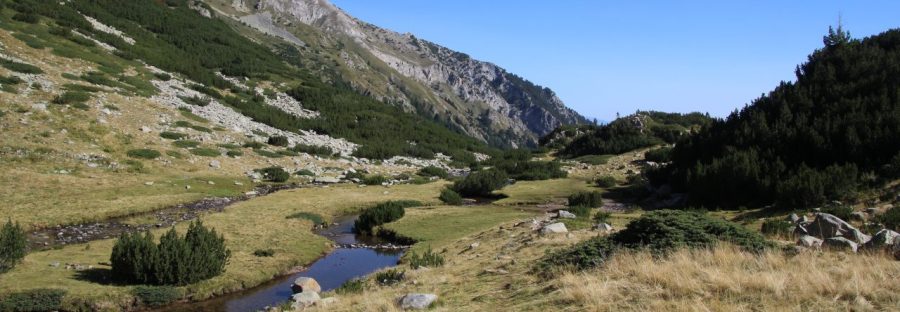
Bulgaria: 2017

This post is not going to be as long as my previous trips due to the nature of the trip its self.
IMG_4533

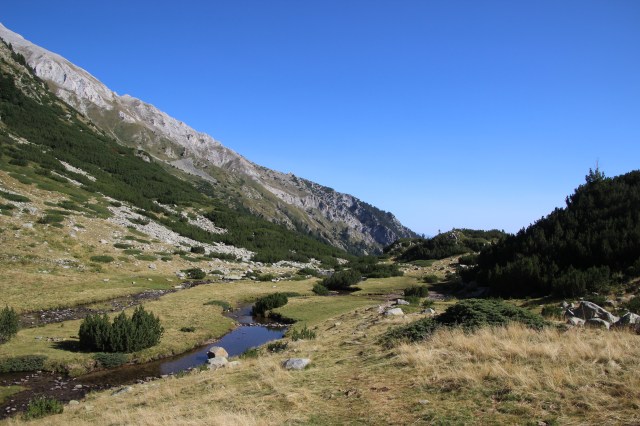
On arrival in Bulgaria, I was met with the vast beauty of this hidden gem on the edge of Europe. The mountains could be seen in the distance towering high into the sky. My destination was Bansko, an area at the foot of the Purin mountains known for its huge ski community and history.

The drive from the airport to the mountains took a couple of hours lulling me to sleep after not sleeping the day before. On arrival at our hotel I was surprised by the architecture of the lodges and hotels. It was as if Greece had met the alps, beautiful yet rustic.

Being surrounded by mountains was tranquil and it was easy to relax. But, we did want to see as much of the area as possible and had come prepared with walking boots and maps.

The food provided in the hotel was more than satisfying and provided enough sustenance for travel up and down the mountains.

Sunday

On our first trip up the mountains we intended to catch the gondola/cable car up to Vihren hut. This we found was not possible. So, we hiked all the way up to Vihren hut and were exhausted! We walked down much quicker with the incentive of food and a well-earned rest. The flora of the mountain on the lower altitudes consisted of grasses and pines with rivers carving their way through.

Monday

Jeep safari:

We booked ourselves a jeep safari of the vista points of Bansko and its surrounding area. We managed to see some amazing birds of prey and a Hoopoe.

My mum and I decided to take a walking route she had previously printed out that used the ski road, bike and bridal paths. Unfortunately for us we walked on the hottest day of the trip and the ski road proved a drag. After gaining some altitude, we were once again in the forest with refreshing springs to quench our thirst. Coming across a wet grassy area I found my first amphibian: a frog. I frantically tried and failed to catch it, and on giving up I saw movement.  Not a frog but bigger, a Sand Lizard! I had seen these in the UK but had been unable to catch one due to the law.

I crept closer and closer to get a photograph after which we proceeded back down the hill towards the town.

Tuesday

For the second walk of the trip my dad joined us. Thankfully it was a much milder day as this walk took us deep into the pine forests which were covered in lichen and moss and looked like a scene from Jurassic park!

Our goals were to reach the ancient fortress ruins and find the local dam.

We kept climbing with the forest enclosing more around us until we reached a steep sided turn, that led directly to the ruin. Upon reaching the summit we found the fortress ruins. The view to the lower valley was breath taking. The bonus to the trip was that the site was in the processes of being excavated, it was as if we had stumbled on Time Team excavation. There were no archaeologists present so we explored the ruins and along the walls were finds from all the trenches: pot and bones.

We had just about finished looking around the ruin when I spotted the best thing ever!  A Fire Salamander, the mild, damp conditions the night before combined with the altitude drawing it out from its home. Its markings were beautiful, I never thought in my life I would just stumble across one. After many photos of this beautiful creature, we headed back down towards what we hoped would be the dam.

Short story we got lost! But as a perk we found a traveling companion for a good section of the trip. A Burmese Mountain dog, we nicknamed Jackie, as she reminded us of my brother who always leads the pack and checks behind to see if we are still there.

We reached a fork in the path and were frantically trying to work out where we were when we noticed a sign with a bear in front of us! I used Google to translate it, to find out what it said. We found we were in bear territory! At that moment, the heavens opened and there was a down pour and took this as a sign to turn back and head downwards. We got drenched.

Wednesday

During the trip, we had intended to see at least one bear, so to ensure we saw at least one we booked a trip to the bear sanctuary “Dancing Bears Park,” Belitsa. The drive took some time through winding roads, and as we approached the sanctuary, what do we see coming out the undergrowth? A BEAR! A wild one, unfortunately I was too slow to get a photograph.

We arrive, pile out the taxi and head to the reception area. The tour took us around the bears habitats where we learned about each individual bear. Whilst listening to the guide we saw another Fire Salamander! The rescued bears were formerly dancing bears and you could still see evidence of their mistreatment. The sanctuary gave a sad understanding of the cruelty that still happens today, but thankfully not in Bulgaria.

Thursday

Today was a big day we were going to hike to the Bunderishka Lakes. My dad being over the age of 70 years was struggling with the altitude so going to the summit was out of the question.

We took the local bus up to Vihren hut where we set off. It was a long walk to the first lake but the path was easy going underfoot. After reaching the first lake we were gobsmacked by its surreal beauty, the water was crystal clear you could see hundreds of small fish swirling and pooling around whatever went in the water. I stepped into the like and they swirled around my boots picking through the mud for scraps.

After spending some time gazing at the lakes beauty, we consulted the map to work out our route to the next lake. It showed a path left so we followed it up the side of the mountain.

This was not the correct route, and we ended up going on the hardest route to climb an almost vertical boulder field. This took a long time but was worth it as we now reached several lakes with fresh water life: frogs, fish and invertebrates. The life in the lakes was significantly less than at lower altitude lakes probably due to reduced oxygen and minerals at this altitude.

My GPS system said one of the lakes provided fresh drinking water. All the lakes were full of an interesting type of reed I couldn’t identify, instead growing up it lay horizontally on the lake surface.

The downwards trip of the mountain consisted of many jutting out rocks and boulders. We reached the road to the gondola station and were treated to the site of eagles soaring over our heads. It was amazing!


This slideshow requires JavaScript.

Friday

On our final day, we took a short trip up the mountain to go on a huge water slide positioned on a ski slope I could barely open my eyes or breathe due to the amount of spray in my face. My mum and I then spent the afternoon exploring the town amazed at how clean and beautiful it was.
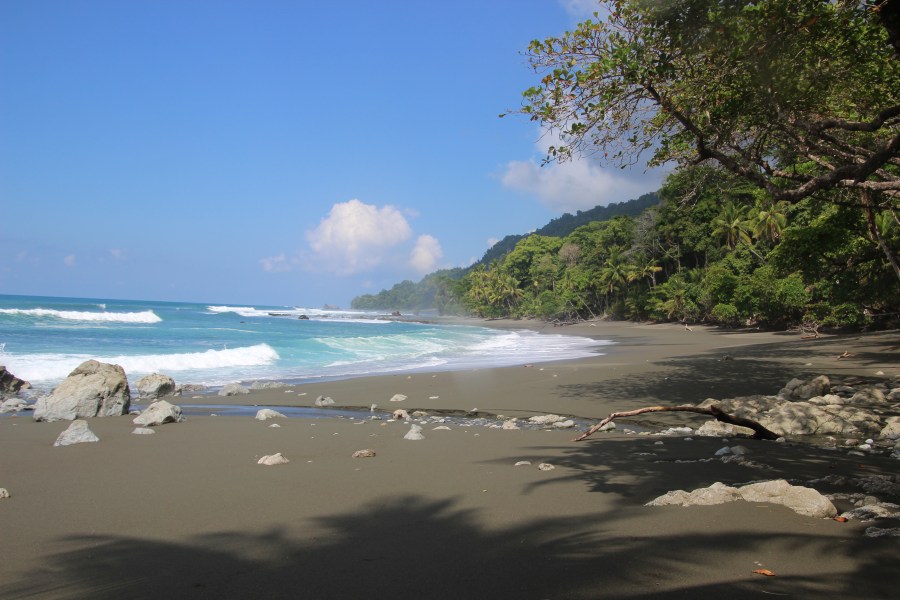
Costa Rica 2018: A Three Month Adventure!

So, here I am in Costa Rica! First impressions, my goodness this place is beautiful! Second impression my god it’s hot!

Camp life is basic, but, thank goodness there’s running water and showers.

My bunk consists of a foam mattress on a bunk bed in a bamboo cabin with walls made from green mesh, it’s not cosy but keeps most of the bugs at bay, sadly not the damp.


Surveys

So, let’s summarise, each day there is a survey schedule: starting at 5:00 am (sometimes earlier) and the end survey starting at 10:30 p.m.

Best not sign up for an early and a late.

Surveys takes place every day of the week but on the weekends only turtle surveys are conducted.

Since my arrival in Costa Rica the survey method for several of the study groups has been changed, for example with the turtle survey, this went through two lots of changes.

What does this entail? Well, excavations are completed to the local turtle populations nest to see the rough number of hatched, unhatched and predated? This can be gruesome finding rotten eggs and maggots isn’t pretty. Although the beautiful sun rise at the beach makes up for that I’m my opinion.

Excavations have been merged with the standard turtle survey which consists of patrols along Carate and Leona beach, a round trip of about 5km all before breakfast! The morning turtle surveys were conducted in groups of two or more each scanning for signs of new nests, predated nests, and hatchling tracks. When something new was found, the leader of the survey records what is found. In the case of a new nest –  the location of the eggs would be identified with a stick, searching for soft sand consistency, once found, a number marker would be placed within a hole and the nest covered with a bamboo cage it is then be marked with a number, GPS taken and distance from the vegetation measured.

Night turtle surveys took place on only Carate beach. Groups patrolled at night for turtles laying, using red light and then recording the location of the turtle nest sites.

Bat survey: this is a lot like those done in the UK, a selected area is patrolled, and the sounds of the bats are recorded and identified. My walking pace was abnormally quick so staying slow for the detector proved difficult, so I adopted a waddle known as the bat waddle.

Reptile survey: entails trekking through the jungle at night or in the day with head torches scanning high and low for amphibians and reptiles. Throughout my 3 months – this was by far one of my favourite surveys; you’d never be sure of what you’d find. I’ve seen various species of snake, lizard and numerous amphibians my favourite of which being either the Green and Black poison dart frog or the Smokey jungle frog.

Mammal survey: mammal surveys were one of my favourite surveys a chosen trail would be hiked, and you would have proceeded to scan for signs of mammals be that tracks scratch marks or scat, it was always satisfying finding a nice fresh print, on my last survey on the river Rio Carate, I found prints of two individual norther tamanduas and a woolly opossum. Camp firsts if I remember correctly!

Bird survey: bird surveys relied on acoustics to identify the number of birds in specific locations, we studied certain species and had recordings of each call and used these recordings to learn the sounds, setting out prior to dawn and resting in certain locations and taking note of the species identified and number.

Primate survey: involved walking out into the jungle on almost all the trails and taking behavioural data recordings of identified groups or individuals, be that resting, feeding, fighting or traveling.

AIM’s: With another volunteer I set up a relaxed fun survey looking at the invertebrate life found in the jungle we found all sorts of amazing things and took numerous pictures of them. When not on one of these surveys a tarantula burrow was discovered, and I proceeded to entice it to come out and attack a stick using the stick to mimic an insect’s behaviour.

What else have I been doing? I’ve been building, I’ll probably be doing this sometime, I’ve been building a gazebo. Apparently, this summer it will be filled with school children – a place to relax and a spot for presentations. So far, we have the bamboo for the base cut, 3 out of 4 holes dug and a great idea in our heads.


Highlights for me.

I was writing this post and I heard a rustle and I look up to see a huge green iguana less than 3 meters from me, it stopped still, and I got the most amazing photos, so being the nice guy, I am I told everyone else on camp what I’d seen not believing me people were slow to come out but once they did everyone dived for their cameras. Soon after our resident all-rounder Roger, was seeing how close he could get. Of course, the iguana ran off…. Straight into the camp kitchen. After some time, we finally got the iguana out and out the camp.

Crocs! I spent most of my free time at the weekend on excursions such as kayaking around mangroves, one of the best experiences of my life, getting up at 4 in the morning was worth it, setting off in gulf at first light to sit in the calm waters as the sun rose before my eyes. You’ve never seen such beautiful sunrises as I did in Costa Rica. After watching the sunrise for some time, we headed into the mangroves. On my first-time trip, I was lucky enough to see several baby American crocodiles.

Corcovado National Park: living on the Osa peninsula there was no doubt in my mind I was going to visit the national park one of the best decisions I ever made, no without spoiling it for everyone who goes if you want to see a Tapir you will undoubtedly see one in the park and get closer than you ever thought possible. I spent two days in the park and on the morning of the second day before leaving the ranger station I was greeted by the slow walk of a Tapir and its calf. Whist in the park I also got treated to 2 northern tamandua anteaters and ocelot tracks on the beach. To top it all off the first night I got one of the nicest sunsets I’ve seen in my life!

Chocolate farm: there was a chocolate farm in the nearby town of Puerto Jimenez, which held tours of their grounds and there farming process. It was lovely to see a farm that kept a balance between the jungle and agriculture, they went on to show us all sorts of trees, what properties they had and why they were important. I wish I’d remembered their names looking back now. We then proceeded to their manufacturing area, where they demonstrated all the processes involved in making pure untainted chocolate, my goodness its rich stuff but I couldn’t stop eating it!

Poo: from my previous blogs I’m sure that my readers know how much I’m willing to get my hands dirty and explore and take risks. That’s exactly what I did, when I found some scat on a trail I got some gloves on and dissected that scat! After dissection several bone fragments and teeth were identified, which enabled us to surmise that the scats belonged to a Puma and an Ocelot, presumably the individuals we had caught on our camera traps.

So here I am sitting in the rain as my final week in Costa Rica nears its end. I’ve had highs I’ve had lows but without a doubt but, I can undeniably say I’ve had an amazing time, embracing the Costa Rican motto “Pura Vida”, meaning “pure life.”

Could I describe the best part of my time here? No. Could I describe my worst? Probably! Jokes aside though, am I going to recommend going to Costa Rica? Yes, from a Scientific standpoint it’s the most biodiverse place I’ve ever been – full of life in every corner. No matter where you go you will find something wild and amazing.

Would I go here for sun sea and sand? I wouldn’t personally, but there is no shortage of sea and sand, the sun more often in the dry season!

Costa Rica is a place for adventure, scientific discovery and opening your mind to the world.

Through my 3 months conducting surveys for the Frontier organisation, I have learned so much about myself and the natural world.

To Costa Rica.

Hi there,

So I’m off to Costa Rica to volunteer on the big cat conservation project, I’m there 3 months!

I will be making a little change from my normal blog style.

I will be writing a summary and I intend to do a video blog while there. Which will show all the highlights.

Day 10: Vingerklip

Today we headed to the Vingerklip area where we would be visiting the living museum, this museum depicts tribal life and culture of the Damara people. Whilst being taken around the museum I couldn’t help but look at the lizards scuttling around with beautiful orange and yellow stomachs. In the moments I wasn’t being distracted there was a talk on the natural healing methods that are traditionally used. After a small amount of research, the more herbal based healing methods could have possibly worked, as most conventional drugs and cures use derivatives of these plants.

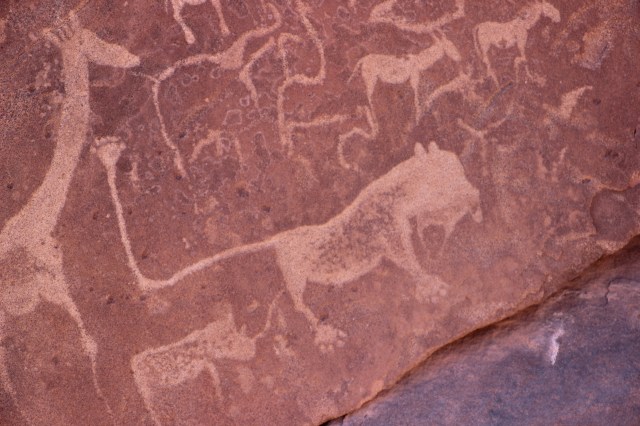
The second stop today was the Twyfelfontein Rock Art; these are rocks that have carvings from the tribes that travelled through there since the stone age. There are a total of near 2,500 rock engravings of various people and animals these depictions are often spiritual and have religious significance. One of the most famous carvings is the depiction of the lion, although this is not a normal lion it is a tribe’s shaman taking the form of a lion this is depicted by having the lions tail take the form of a hand or foot.

IMG_1470.JPG

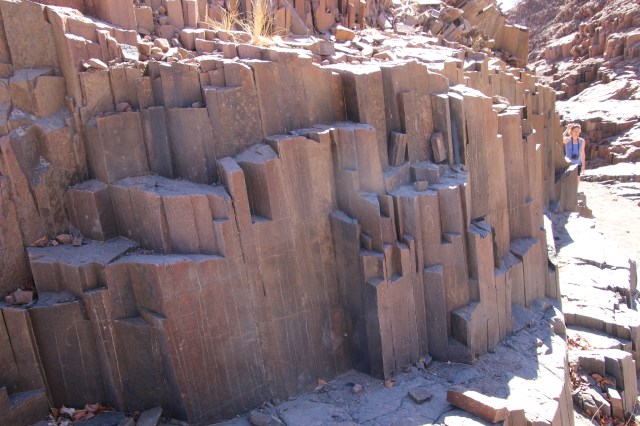
Our next significant stop was the organ pipes situated a few hundred metres from burnt mountain which is a result of volcanic activity mixing dolerite with organic matter.

The organ pipes themselves are vertical rocks of dolerite that reach up to 5 metres high, these were formed when the dolerite cooled to form angular columns.

IMG_1480.JPG


Our final stop before our lodgings for the day was the petrified forest. This 260-million-year old collection of trees is the result of the most recent ice age the huge weight of earth and ice compacted the trees preserving them. The movement of the glaciers moved the trees all the way to where Namibia is present day they did not grow here. Looking at the petrified trees it’s hard to believe they are made of stone, but after banging two pieces together the sound of metal chinking removes any question.

IMG_1517.JPG


Day 11-13: Safari Etosha

The last few days of my trip were spent in the Etosha National park on safari where we saw various amounts of types of wildlife. I will highlight the best of the best in this post.

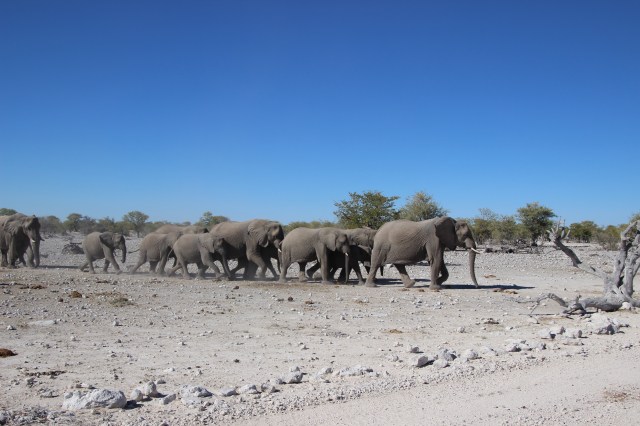
Not long after entering the park we were treated to a rare sight, a whole herd of roughly 20 elephants of varying ages proceeded to cross the road right beside us. the sheer size of the herd was the most surprising thing.

IMG_1544.JPG

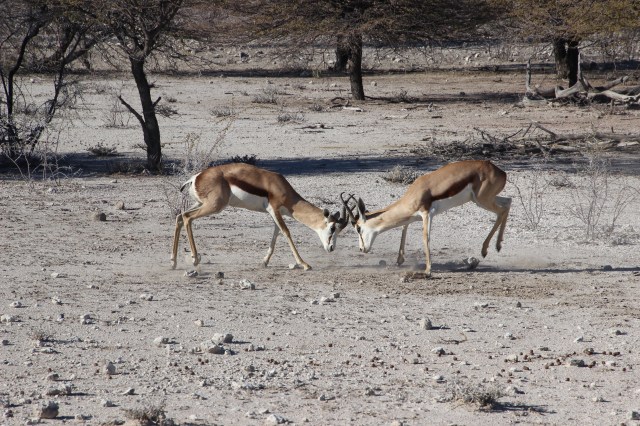
The next highlight of the first day was witnessing a fight for dominance between two male springboks. It allowed for some fantastic photographs.

IMG_1597.JPG

The final great sight of the first day in the park was finally seeing a lion, although it barely looked more than a pinprick in the distance. I am uploading the photo as I took it so you can see how little we could see.IMG_1696.JPG

On the second day we took a short break at one of the water holes and I found my new favourite animal of the trip. The jackal they were so playful, watching the stalk prey was so fascinating.

IMG_1835.JPG

Top sighting number two for day two was the extremely hard to see African wild cat who walked straight by us while being mobbed by birds.

IMG_1943.JPG

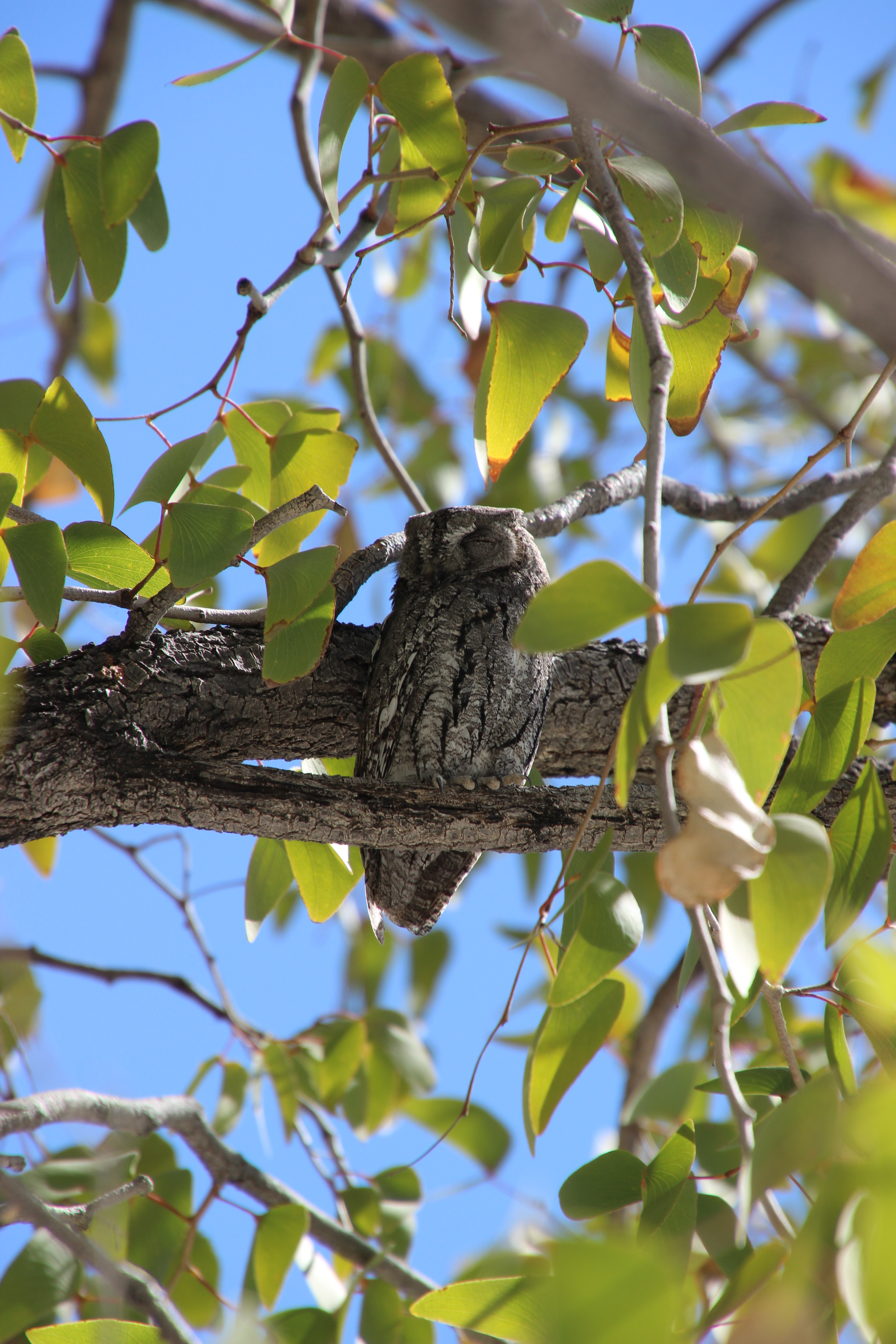
When you think of owls you often think hard to see and at night or early morning. What about an owl out in broad daylight in a sunny tree this little cutie was sitting above our heads in a car park.

IMG_2017.JPG

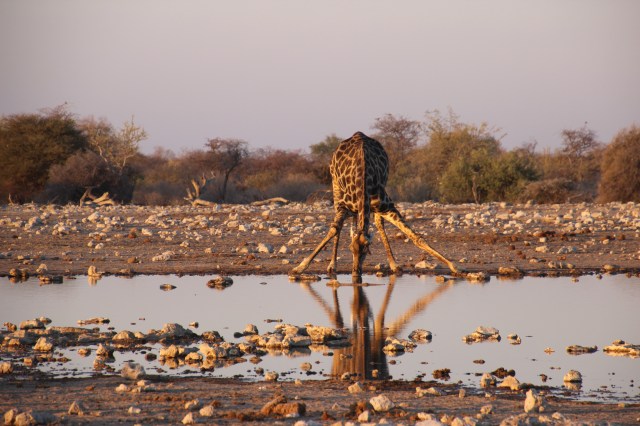
On our final day in the national park we stopped until the sun was almost set, it was well worth it, although most the day had been disappointing we managed to witness giraffes drinking having to part their front legs so they could lean far enough to drink.

IMG_2508.JPG

Day 9: The living desert

At 8 am my family and I left the hotel to go on a living desert safari, the drive to the desert was short and after a short wait for the main guide for the trip Colin, we headed into the desert stopping by a patch of sand we climbed out of the jeeps and gathered round Colin he began to draw a map of Africa and especial Namibia , he went on to explain how the dunes were formed, now I could go into this process on here but it would take some time so here this sums it up nicely: http://www.namibiansun.com/content/agri/sand-dunes-namib-fascinating-dynamic-and-ever-changing

After being educated about the formation of the dunes we walked off to were a sprinkling of sand was around a small hole on the dune a Gecko hole!

Colin began to dig and soon enough he found the gecko, in fact it was a Palmato gecko, I will admit I awed when I saw it. (manliness points lost)

He explained that it was nocturnal and ate small insects it was extremely sensitive to sunlight (its skin in translucent).

After another short drive in the jeeps near desert scrub we went in search of more creatures about 5 minutes into the search someone shouted snake and Colin began running over saying stay back. This was for good reason as the snake that had been found was a Horned adder which has no anti-venom.

After showing its warning puff noise (its related to the puff adder), Colin tried to get it to move and it slowly slithered, after taking many photos we left it in peace and shortly travelled on again.

IMG_1353.JPG


Reaching the side of a dune with a very unusual squiggle on the side to twisty for a snake track, Colin immediately dug up one end of this squiggle and soon he had lizard, this is no ordinary lizard those family with a slow worm will know what I mean. The lizard is known as a Lance skink, once Colin replaced it on dry sand it quickly contorted and vanished into the sand.

Our final find was the Namaqua chameleon, the same sort id previously seen at the ghost town, I also found a dead one in the area too it looked fresh and rather grim. The males of this species have a yellow underside to their heads whereas the females have a red one. Colin went on to explain that their tongues could get as long as their bodies, eating each other small snakes and insects.

The tour concludes with a drink by a dune which we scaled it was fun.

Day 8: Trip to Walvis bay/Swakopmund

A fairly early start again as we headed on our way to Walvis bay, our first stop was the little town of Solitaire famous for its isolation and apple pies my driver suggested buying apple pie to eat on route to Walvis bay.

Little happened until around 9 where we sighted a group of mountain zebra by the side of the road much closer than seen before and very unusual for the usually very timid animals.

IMG_0969

On leaving the zebra around 10 o’clock we reach moon valley very hilly landscape carved through the Nanib desert by Swakop river, named due to is resemblance to a lunar landscape.
while exploring the area I stumbled upon a zebra’s foot yes a zebra’s foot. My guide thought it possibly may have been dragged there by a jackal.

We found several desert flowers in the surrounding area.

IMG_0999.JPGOn arriving at Kuiseb canyon we scrambled around the black malachite and granite rocks. My mum shouted bird of prey and I looked up from what I could see it looked like a vulture. Unfortunately, even after photographing the vulture I wasn’t able to work out its type but I have a hunch it is a leopard faced vulture.
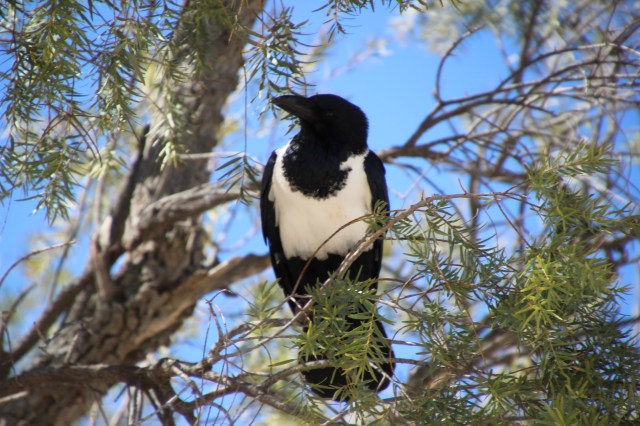
We shortly left the canyon and hit the road our final stop before Walvis bay was Feather rock a huge granite rock sticking up out the Namib desert, while the rest of my family and guide were eating their apple pies by the rock I climbed the rock and walked its length after reaching the end I ventured around the back of the rock and explored the gully’s and bushes around it, on climbing back up the rock I found an unknown animal skull and befriended two pied crows.

IMG_1103

Our final stop before our hotel for the night was Walvis bay lagoon home to hundreds of flamingos. Walvis bay is the largest port in the southern part of Africa and is filled with large extravagant houses this area is where people go to make a profit. I was more interested in the wildlife in the bay. As soon as I saw the flamingos I was gob smacked it is being pink pink and more pink, only broken up by the few pelicans and cormorants.
The lagoon is over dates back 5000 years making it the oldest lagoon on the Namibian coast, up to 90% of south Saharan flamingoes winter there.
The lagoon itself is reducing in size due to housing and road dikes, these are flood reduction measures but have caused the reduction of the lagoons maintained water level.

Our hotel or the night was the beach hotel in Swakopmund a German style tourist town by the sea.


Day 7: Sun and a lot of sand

Today we headed to the oldest desert in the world home to the highest dunes, in the second largest national park in Africa.

Lots of big ones today.
On the trip we saw various birds on arriving at the dunes we were informed that in order to access them we would need to swap to a 4×4 while waiting we photographed several birds and joked with our driver about his cattle.
We soon piled into the 4×4 it was funny as my brother and father were called over to the 4×4 like cattle by our driver/guide who waved his tribes traditional cattle stick and whistled.
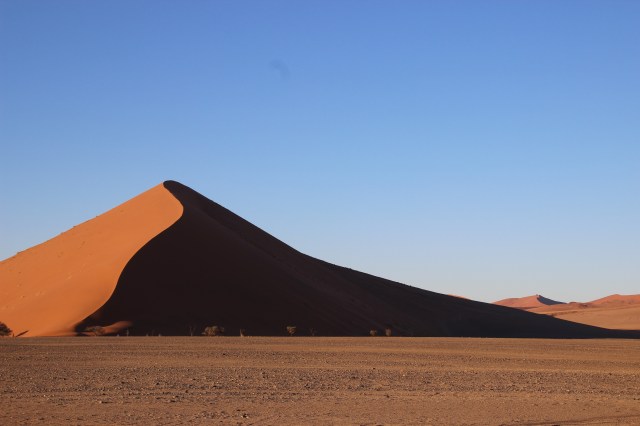
The ride to the dunes was very bumpy making photos almost impossible but I managed to snap a fair few. We arrived by the dune known as big daddy that stands next to the petrified remains of trees of Dead Vlei. These trees once grew alongside a river but the dune grew blocking the rivers path.
We walked along the first ridge of big daddy and upon reaching a fork in the dune one leading down the other up. Our guide said that we could go up the left if we felt up to it, my brother and I decided to in my over eagerness to climb to the top of a steep hill I spent most of my energy and felt very Ill I almost decided to slide back down the dune but decided I’d be better off trying through how rough I had started to feel. I finally reached the second summit of big daddy no way either my brother or I would reach the summit with the water we had.

IMG_0767.JPG

We took several photos and heading very quickly down the dune completely filling our shoes. Upon reaching the base we emptied out shoes on one of the petrified trees.
On returning to our standard car we drove to Sesriem canyon which was formed by large rivers long ago, the rock around resembles a riverbed a perfect natural cement.
The next stop was our hotel and as usual after a shirt rest I spent the time in pursuit of pictures of birds and other numerous creatures. I found a beetle tangled in Oryx hair and decided to set it free with the aid of my brother.


Day 6:The long road

Today was a day of travelling, although saying that it was not dull. We spent it spotting birds of prey on telephone poles,  numerous amounts of goshawks and at least 4 kestrels. Highlight was the sight of a snake eagle flying overhead.

Due to the straight long roads I was shortly lulled to sleep and spent the majority of the journey asleep.
On arrival at our lodgings we settled down to chill by the pool. My camera close by as I was in pursuit of a photo of the rose faced love birds.
In the interim of chasing fast flying love birds I rescued large wasps from the pool, which was a waste of time as they soon crashed again into the water.
Towards the evening my mum accompanied me around the grounds of the hotel and we discovered several love birds I finally got a photo. On return to my brother and father my mum spotted a small rodent I am yet to identify.

Day 5:Kolmanskop, Luderitz and Diaz Point.

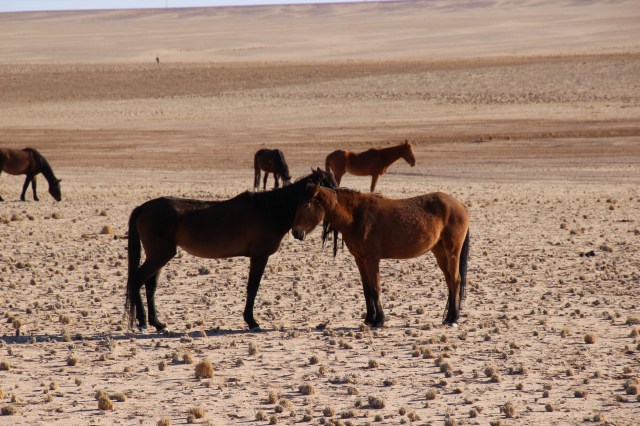
Today we headed out to Luderitz on the way we were going to visit the old diamond mining town of Kolmanskop. Before reaching Kolmanskop we travelled though the private diamond lands in the Namib desert this is home to a population of wild horses. Without having to go to the specific viewing point we saw the horses up close and were even able to pet a feed one of them, it had a completely brown coat and a white sock on its left hind leg, we later found a picture of this same horse in a tour book.

IMG_0344.JPG

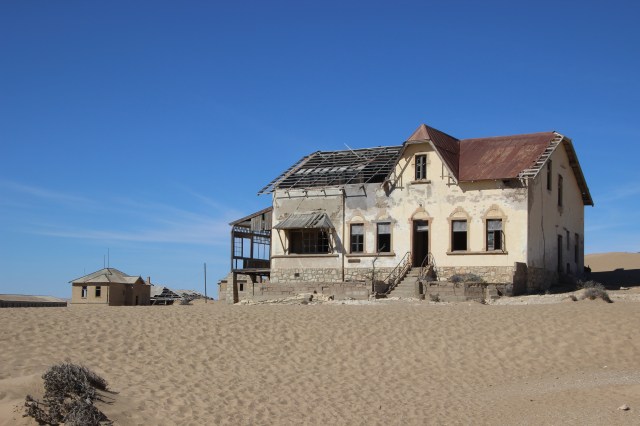
After departing the horses, we shortly reached the Ghost town of Kolmanskop, where we received a tour explaining how the town worked and what the remaining buildings were. There was a hospital, power station, school, and meat house. there was even a recreational area for bowling.

There were several houses built for the wealthier inhabitants of the area, such as the architect mine manager, teacher, shop owner and the doctors. All but two of the buildings that were present could be explored the exceptions being the teachers house and the Power Station.

On exploring the buildings many animal tracks could be found from rodents to large mammals even several snake tracks were found, I also collected several feathers to add to my hat.

Someone found an endemic Chameleon by one of the buildings and called people over, it was mostly a dark brown with a yellow underside to its head. I took many photos of this fascination creature

IMG_0419.JPG

After regrouping we once again set off to our next location, Diaz point this is a headland that faces out into the open Atlantic, the headland is where the desert meets the sea. Diaz point has a cross placed upon its summit to show where the first Europeans made landfall.
From Diaz point you could see a small rocky outcrop covered in Fur seals basking in the sun I snapped several phots of these before rock pooling with my mother finding start fish, small fish and urchins.

After observing the beautiful coastal vista, we would take a short trip to a hotel to try oysters, something I’d never done before, well I’m not a fan I’d rather have mussels anyway. Although the shells are very pretty may have kept mine from the tasting. Before departing to return to our hotel we sat out on the front and watched the sea I spotted a pair of Black oyster catchers perched on a nearby rocky outcrop.